How Hyperalbuminemia Affects the Anion Gap
What Is the Anion Gap?
The anion gap is a derived value used to help interpret serum electrolytes on a routine electrolyte panel and wider blood chemistry testing. It estimates the difference between the positively charged ions and the negative ions that are regularly measured in blood. In practical terms, it is typically calculated from serum sodium, serum chloride, and serum bicarbonate.
The classic anion gap formula is:
anion gap = sodium − (chloride + bicarbonate)
This anion gap calculation is a helpful screening tool for spotting abnormal acid-base balance, especially when evaluating metabolic acidosis. Because the test is based from routine lab values, it is often part of early diagnostic evaluation and helps clinicians narrow the differential diagnosis of an electrolyte imbalance or broader metabolic disorder.
Even though the calculation looks easy, the result depends on the surrounding measurement context. Changes in serum electrolytes, shifts in plasma proteins, and differences in laboratory methods can all affect the final number. That is why careful acid-base interpretation matters. A value that appears “normal” may not fully reflect the patient’s true acid-base status, and a value that seems abnormal may need additional review.
How Albumin Shapes the Anion Gap
Albumin is the chief negatively charged protein in plasma, and it has a significant role in the body’s overall charge balance. Because of its negative charge, albumin accounts to the pool of unmeasured anions that are not directly listed in a standard electrolyte panel. These plasma proteins help account why the anion gap exists at all: not every ion in blood is routinely measured, so the formula captures the difference between measured cations and measured anions.
When albumin concentration changes, the apparent anion gap can vary as well. Low albumin is classically associated with a lower gap, but higher-than-usual albumin can also influence interpretation. In the setting of hyperalbuminemia, the increased amount of negatively charged protein may increase the calculated gap modestly or make a borderline value appear more meaningful than it really is.
This relationship is important because albumin is not just a passive lab value. It modulates protein binding, fluid distribution, and the measured balance among ions in blood. Since albumin is one of the key unmeasured anions, changes in its level can alter the apparent anion gap calculation even when other electrolytes look stable.
For that reason, clinicians often look at the broader pattern rather than the number alone. The result should be interpreted alongside plasma albumin, the full chemistry profile, and the overall clinical picture. This is where a thoughtful acid-base interpretation is more useful than relying on a single cutoff.
Why Hyperalbuminemia Can Affect Clinical interpretation
Hyperalbuminemia is less common than hypoalbuminemia, but it can still impact result interpretation. In many cases, high albumin reflects hemoconcentration rather than true excess production of protein. The primary reason is fluid loss, which increases measured protein levels without necessarily changing the underlying metabolic state.
When albumin rises above the usual reference range, the anion gap may increase slightly because there are more negatively charged plasma proteins shaping the overall electrochemical environment. That does not automatically mean there is a dangerous acid-base problem. Instead, it means the measured result should be interpreted with the albumin level in mind.
This matters because the acid-base balance can otherwise be misread. A mildly elevated anion gap might look like evidence of hidden metabolic acidosis, but if the patient also has hyperalbuminemia, part of the elevation may be explained by protein concentration rather than excess acid production. The reverse is also true: a “normal” gap may not fully exclude an issue if the surrounding physiology suggests a more complex pattern.
In other words, hyperalbuminemia creates a interpretive context that can change how the result is viewed. The number itself is still useful, but the threshold for concern changes when albumin is outside the expected range. Careful lab interpretation reduces the risk of overcalling or undercalling an acid-base problem.
Correcting the Anion Gap for Albumin
Adjusting for albumin is the method of adjusting the measured value to account for unusual albumin levels. Most providers are familiar with correction for reduced albumin, but the same principle can be applied when albumin is increased. The goal is to estimate a more accurate corrected anion gap that reflects actual physiologic status rather than protein-related variation.
A commonly used equation for albumin adjustment is based on the idea that each change in albumin shifts the gap by a consistent degree. While exact formulas vary by institution, the key principle is simple: if albumin is higher than the usual baseline, the adjusted value may be somewhat lower after correction. That can improve diagnostic accuracy when reviewing borderline or unexpected results.
For example, if the raw anion gap is somewhat increased and the albumin level is clearly above the reference range, a corrected value can help determine whether the result truly suggests an acid-base problem or whether it mainly reflects high protein concentration. This is especially useful in patients with possible mixed acid-base disorder, where multiple body processes may be present at the same time.
Correction should be used judiciously. It is not meant to replace clinical judgment or the rest of the laboratory data. Rather, it improves acid-base interpretation by placing the result in the proper context. The benefit is greatest when the difference between the uncorrected and corrected values would change next steps in clinical decision-making.
How to use an Anion Gap Calculator in Clinical Settings
An Anion Gap Calculator is a practical https://anion-gap-review225.theglensecret.com/anion-gap-and-delta-gap-calculator-reference way to perform the anion gap calculation rapidly and consistently. It is especially useful when examining an electrolyte panel or tracking trends across multiple laboratory results. Because the calculator uses the core inputs every time, it can reduce math errors and promote faster clinical decision-making.
In practice, the calculator is most valuable when the numbers are interpreted in conjunction with the rest of the blood chemistry. A normal or abnormal gap should be considered in the context of serum electrolytes, albumin concentration, kidney function, symptoms, and any signs of metabolic acidosis. If albumin is unusually high, the calculator’s output may need to be regarded as a baseline rather than a final answer.
This is where a calculator adds value as a screening tool. It normalizes the starting point, but the clinician still has to judge whether the result fits the patient’s overall pattern. A simple numeric output may not capture all the relevant physiologic changes, especially if dehydration, protein shifts, or a mixed acid-base disorder are involved.
Using an Anion Gap Calculator alongside albumin-aware interpretation can strengthen the recognition of subtle problems and reduce interpretation pitfalls. It is not just about getting a number; it is about making sense of what the number means in a practical diagnostic setting.
Frequent Causes of Hyperalbuminemia
The main cause of hyperalbuminemia is not greater albumin production, but reduced plasma water. Dehydration thickens the blood, making protein concentration seem higher than usual. This process, called hemoconcentration, can raise albumin and other measured proteins at the same time.
Intravenous albumin administration is another possible cause. When albumin is infused directly, especially in a patient with ongoing fluid shifts, the measured level can increase temporarily. That may affect the apparent anion gap, particularly if other labs are being interpreted without awareness of recent treatment.
In fewer cases, sample handling or broader physiologic shifts can affect the measured plasma albumin level. Regardless of the cause, the key point is that a high albumin result should prompt review of the patient’s fluid status and overall acid-base balance. If the increase is due to concentration rather than true change in solute content, the anion gap may be slightly affected but not necessarily pathologic.
Understanding these causes helps avoid confusion during lab interpretation. A slightly changed value may simply reflect fluid status, not a separate metabolic problem. This distinction is crucial when deciding whether to pursue more testing or simply interpret the result in light of the clinical picture.
When a Standard Anion Gap May Be Deceptive
A standard anion gap is not always proof that the acid-base balance is completely normal. Sometimes, albumin-related changes or simultaneous processes can hide a problem. As an example, a patient with a true high anion gap disorder may also have increased albumin from dehydration, which can make the result harder to evaluate if the baseline is not known.
Here is where the idea of a mixed acid-base disorder becomes relevant. A person may have more than one process happening at once, such as a metabolic process that increases the gap and another condition that pushes the value in the other direction. The end result may look deceptively normal. In these situations, the raw number alone can fail to show the broader pattern.
Testing artifact is another issue. Technique-related variation, specimen issues, or unexpected shifts in protein concentration can distort the apparent gap without reflecting true metabolic change. A result that appears reassuring may therefore require further review if the symptoms or other blood chemistry values do not align.
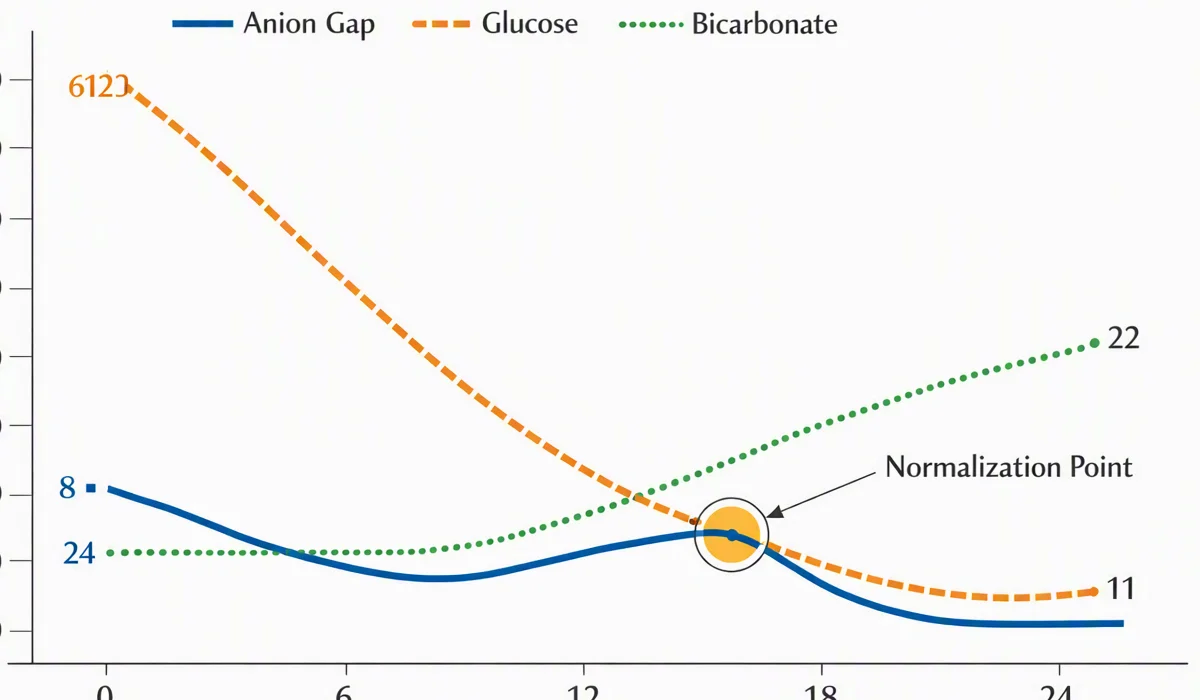
That is why albumin-aware review is important. Both a normal and an abnormal value may be misleading if the normal range is applied without considering the full clinical context. The safest approach is to interpret the anion gap with the rest of the chemistry panel, albumin level, and the patient’s acid-base picture.
Frequently Asked Questions About Hyperalbuminemia and Anion Gap
Does hyperalbuminemia raise or reduce the anion gap?
Hyperalbuminemia can mildly elevate the anion gap because albumin carries a negative charge and contributes to the pool of unmeasured anions. The effect is usually modest, but it can matter when you are assessing borderline results or trying to evaluate a subtle acid-base change.
Why does albumin affect the anion gap?
Albumin is the main negatively charged protein in plasma, so it influences charge balance in blood. Since the standard calculation only includes serum sodium, serum chloride, and serum bicarbonate, albumin helps account for what is not directly measured. That is why changes in albumin levels can alter the apparent gap and affect acid-base interpretation.
Should the anion gap be corrected for high albumin?
Absolutely, it can be helpful in selected cases. Albumin correction may improve the corrected anion gap when albumin is above the usual reference range. This is most useful when the raw result is borderline or when the clinical picture suggests a possible acid-base problem that the unadjusted number does not fully explain. The correction supports better diagnostic accuracy.
Can dehydration cause a misleading anion gap result?
Yes. Dehydration can cause hemoconcentration, which raises protein concentration and may increase albumin. That can make the anion gap look different from what you would expect based on the patient’s true metabolic state. In that setting, the result may be misleading unless you consider the full electrolyte panel and overall lab interpretation.
When is an anion gap calculator useful for lab interpretation?
An Anion Gap Calculator is useful whenever you want a quick, standardized anion gap calculation from an electrolyte panel. It is especially helpful when evaluating metabolic acidosis, checking for a mixed acid-base disorder, or reviewing how albumin may affect the result. Used well, it supports faster clinical decision-making and better understanding of the patient’s overall acid-base balance.